
Mana Wāhine at the Heart of
System Change

Following changes to the Obstetrics and Gynaecology service in Whakatāne, Te Whatu Ora | Health New Zealand partnered with Toi Rāwhiti service providers and local hapori to reimagine maternity and women’s health services across the region.
CoLEAD supported in designing and facilitating wananga a process that would centre the voices of wahine whi lived in Toi Rāwhiti ensuring that solutions were grounded in lived realities and local aspirations.
The kaupapa of the Mana Wāhine Wānanga was to gather whānau perspectives across the life course, including menstruation, sexual health, birth, menopause, and beyond. CoLEAD not only supported facilitation but complied the voices, ideas and solutions into a themes and recommendations report for Te Whatu Ora | Health New Zealand. The goal being to ensure these voices shaped the redesign of obstetric and gynaecology services.

Approach
Two wānanga were held across Toi Rāwhiti over a weekend.
As part of the project planning the following design principles were agreed to:
-
Community-led
-
Equity-focused,
-
Future-oriented
-
Whānau voice prioritised
-
Local autonomy
We shaped each wānanga through:
-
Whakawhanaungatanga and story sharing, building trust and highlighting aspirations for wāhine wellbeing.
-
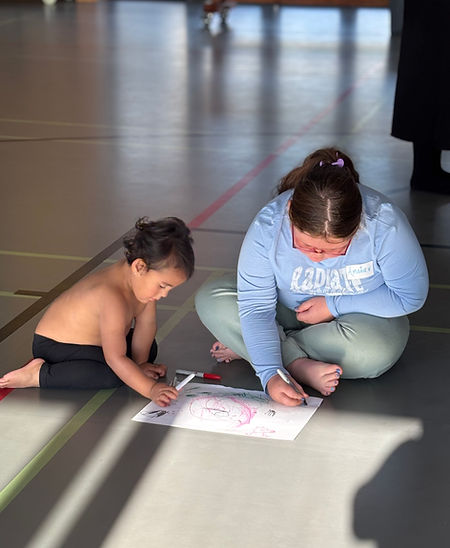
Interactive sessions including the life-course walk-throughs to table talks and guided storytelling.
-
Cultural grounding – karakia, manaaki, and hau kāinga leadership at the heart of every hui.
-
Creative tools such film, imagery and collaborative mapping to spark kōrero and capture insights.
Outcomes
-
Over 80 whānau engaged directly across the two wānanga.
-
Rich qualitative data was collected, thematically analysed, and consolidated for Te Whatu Ora as a foundation for system redesign.
-
Clear pathways identified for immediate improvement (e.g., extending postnatal stays in Ōpōtiki) and longer-term system shifts (e.g., whānau-led commissioning and workforce development).
-
Strengthened partnerships between Te Whatu Ora, iwi, and community organisations, underpinned by mutual trust and accountability.
Reflections
The success of the wānanga was not only in the insights gathered but also in the mana-enhancing process itself.
Te Whatu Ora leadership noted, “What stood out was the sense of safety, warmth, and manāki that underpinned each session. Whānau shared openly, and the presence of tamariki, kaumātua, hapū māmā, and community providers reflected the breadth of connection and trust nurtured over time.”
Evaluation also acknowledged, leadership and facilitation as critical to holding the space with strength, calm, and inclusivity, enabling both honest reflection on past challenges and hope for future solutions.